Practical guide · A “global shutdown” could involve a major cyber incident or disruption to electricity, communications, banking or supply chains. Preparing for several days of unreliable services can also help during hurricanes and other emergencies.
A worldwide disruption can sound abstract, but the household effects are familiar: card payments may fail, mobile data may become unreliable, deliveries may be delayed, or electricity and water services may be interrupted. There is no need to assume every service will stop at once. A calm plan for short-term disruption can help households in Jamaica protect essential needs and make sound decisions.
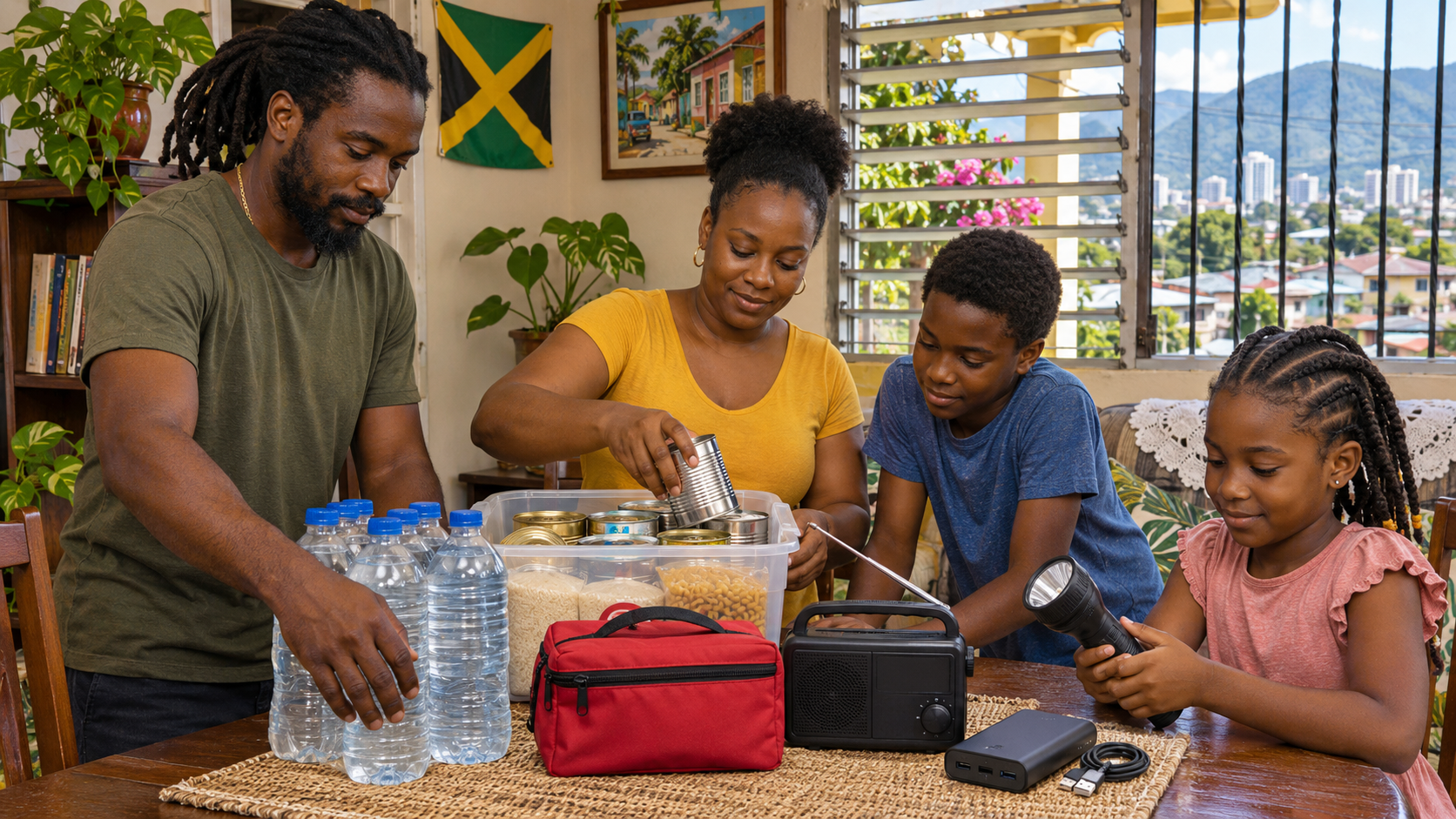
1. Start with a household plan
Choose two meeting places: one close to home and another outside your neighbourhood. Name an out-of-area family contact who can pass messages between relatives if local calls or internet services are disrupted.
Write down important phone numbers and addresses. Keep a paper copy and an offline digital copy. Make sure everyone knows how to reach the family contact, where to meet, and where the nearest shelter or health centre is. Plan for children, older relatives, people with disabilities, pets and anyone who relies on powered medical equipment or refrigerated medication. ODPEM recommends having a family emergency plan and knowing evacuation routes and shelters.
2. Store essentials gradually
Build supplies over time instead of buying everything during a scare. Start with enough for three days, then work toward ODPEM’s recommended seven-day household supply.
- Water: Store drinking and basic-use water in clean, sealed containers. ODPEM advises one gallon per person per day—about 3.8 litres—and at least seven days’ supply. Include extra for hot weather, babies, medical needs and pets.
- Food: Keep familiar foods that do not need refrigeration or much cooking, such as canned foods, crackers, peanut butter, dried fruit and shelf-stable milk. Include a manual can opener and foods suited to children or special diets.
- Medication and first aid: Keep an up-to-date medicine list, prescription copies and a reasonable supply of essential medication. Ask a pharmacist or doctor about medicines that need refrigeration.
- Hygiene: Pack soap, toilet paper, sanitary products, nappies, waste bags, disinfectant and personal-care supplies.
- Light and information: Keep flashlights or battery lanterns, spare batteries, a battery-powered radio and a power bank. Store chargers and a car charger where you can find them.
- Cash: Keep a modest amount in small denominations for essential local purchases if card networks, ATMs or mobile payments are unavailable. Carry only what you can safely protect.
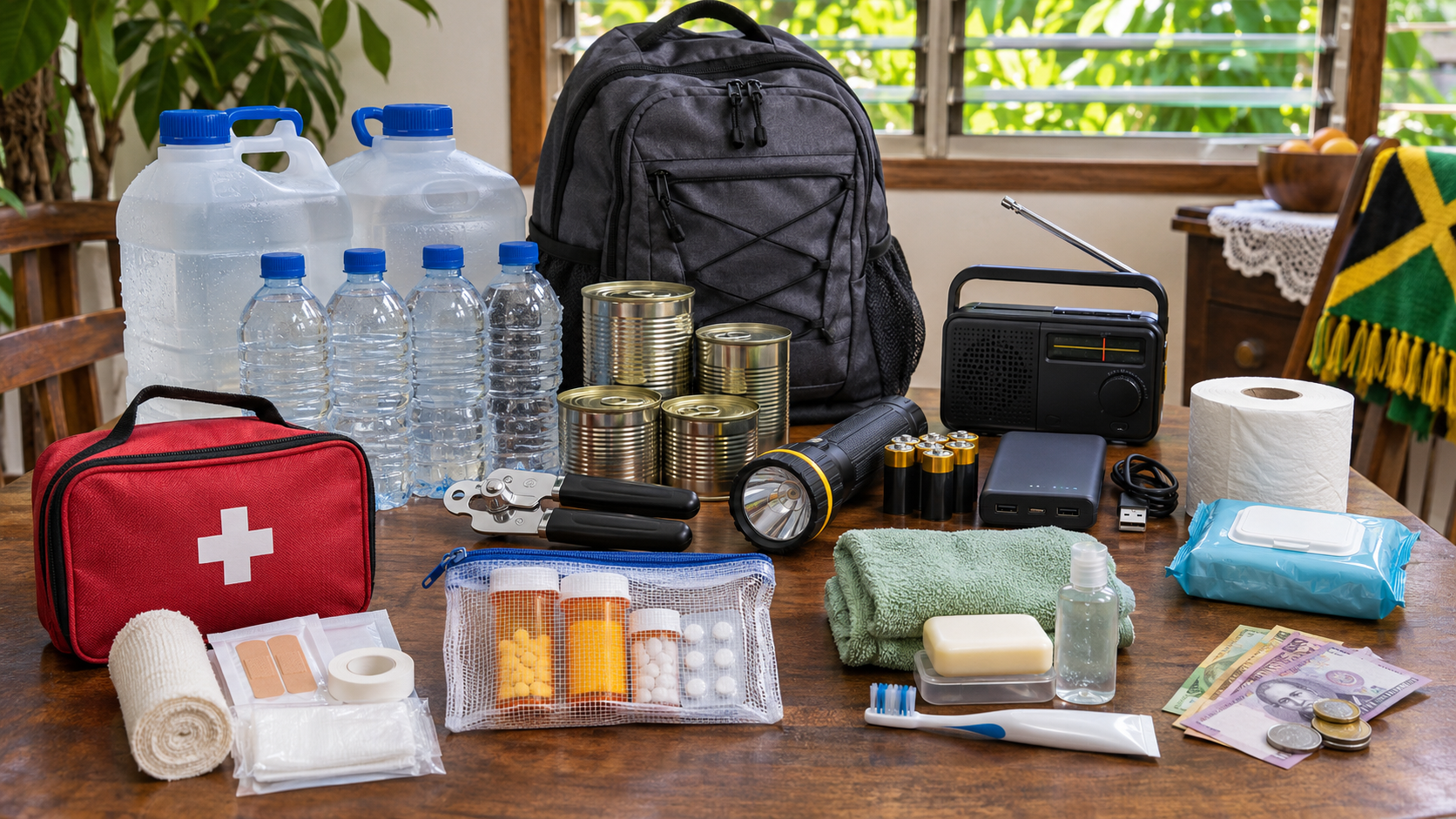
Check expiry dates and replace stored food, water and batteries regularly. ODPEM advises periodically replacing stored food and water.
3. Prepare for power, water and communications problems
Charge phones, power banks and rechargeable lights when severe weather or a disruption is forecast. Download offline maps, important documents and contact details in advance. Keep written addresses and directions in case navigation apps stop working.
If you use a generator, operate it outdoors and away from doors, windows and vents. Never run a generator, charcoal stove or barbecue inside a home, garage or enclosed space: fuel-burning equipment can produce deadly carbon monoxide.
Keep refrigerator and freezer doors closed during an outage. The US Centers for Disease Control and Prevention advises that a refrigerator can keep food safe for about four hours without power if the door stays closed. Discard perishable food that has been above safe temperatures for too long; when in doubt, throw it out.
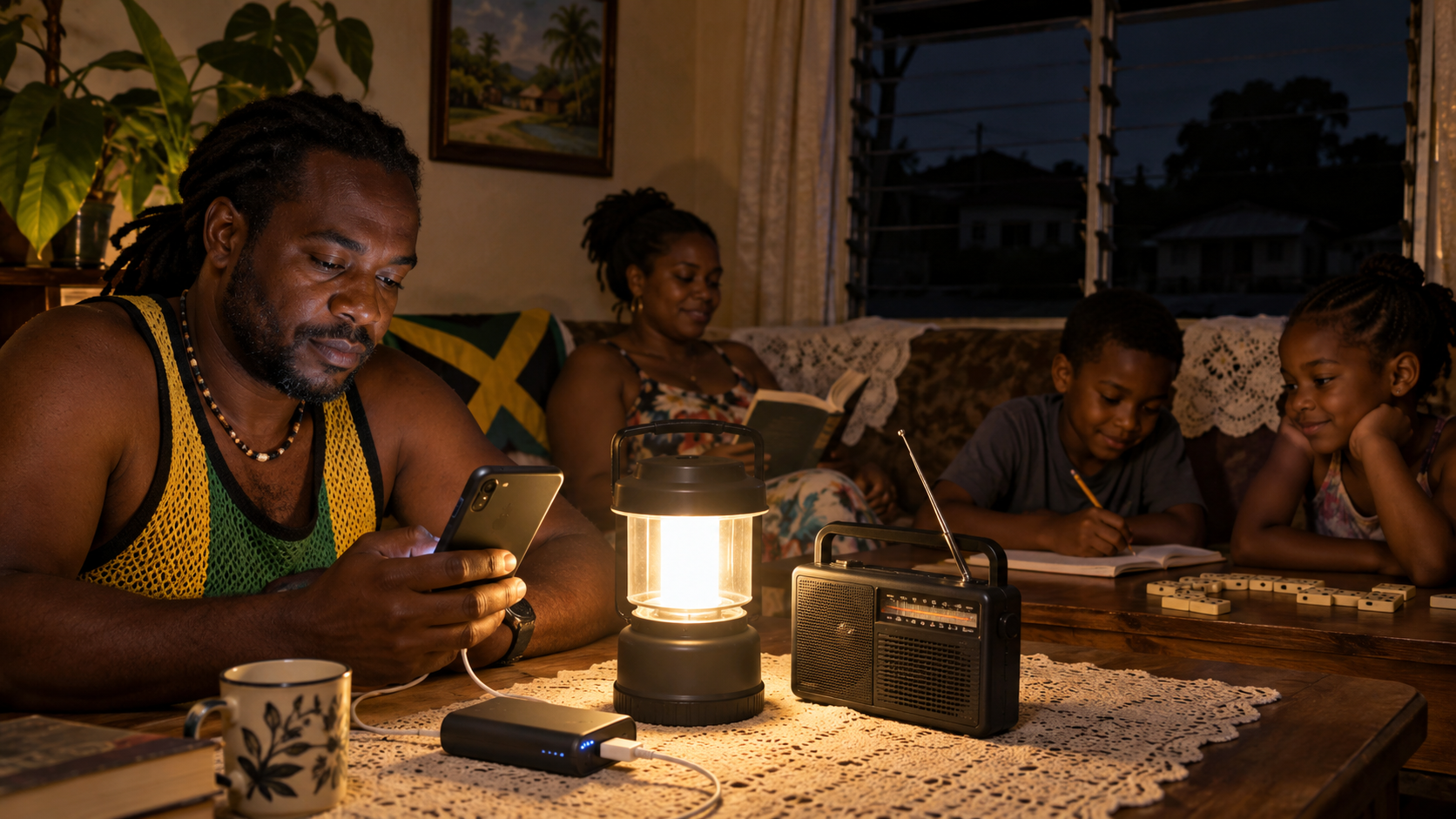
Use a battery radio and official channels for updates. Do not assume a forwarded voice note, screenshot or social-media post is accurate just because it is widely shared.
4. Reduce disruption to banking and work
Before an outage, make sure you know how to contact your bank using its official phone number, website or app. Keep account and bill details accessible offline, but never write down or share your PIN, CVV, one-time password or online banking password.
The Bank of Jamaica has warned the public not to share these credentials, including during a cyber incident. Be cautious of messages claiming you must “verify” an account or transfer money to protect it.
If you run a small business, keep an offline record of orders, supplier contacts and essential transactions. Back up important files securely and decide how you will contact staff and customers if your usual platform is unavailable.
5. Keep travel and daily routines flexible
Fuel stations, public transport, roads and delivery services may be affected by a major disruption. Keep your vehicle maintained and avoid unnecessary trips if fuel or road information is uncertain. Do not store petrol inside your home.
If someone in your household needs regular treatment, identify an alternative nearby health facility and plan how they would get there. Keep a written list of medications, allergies and emergency contacts. If you must evacuate, take essential medicines, identification, water, food, sturdy footwear and a charged phone.
6. Watch for scams and avoid panic buying
During a crisis, scammers may impersonate banks, government agencies, utility companies or relief groups. Verify requests for money or personal information through an official contact you find independently. Avoid clicking unfamiliar links or forwarding unverified claims.
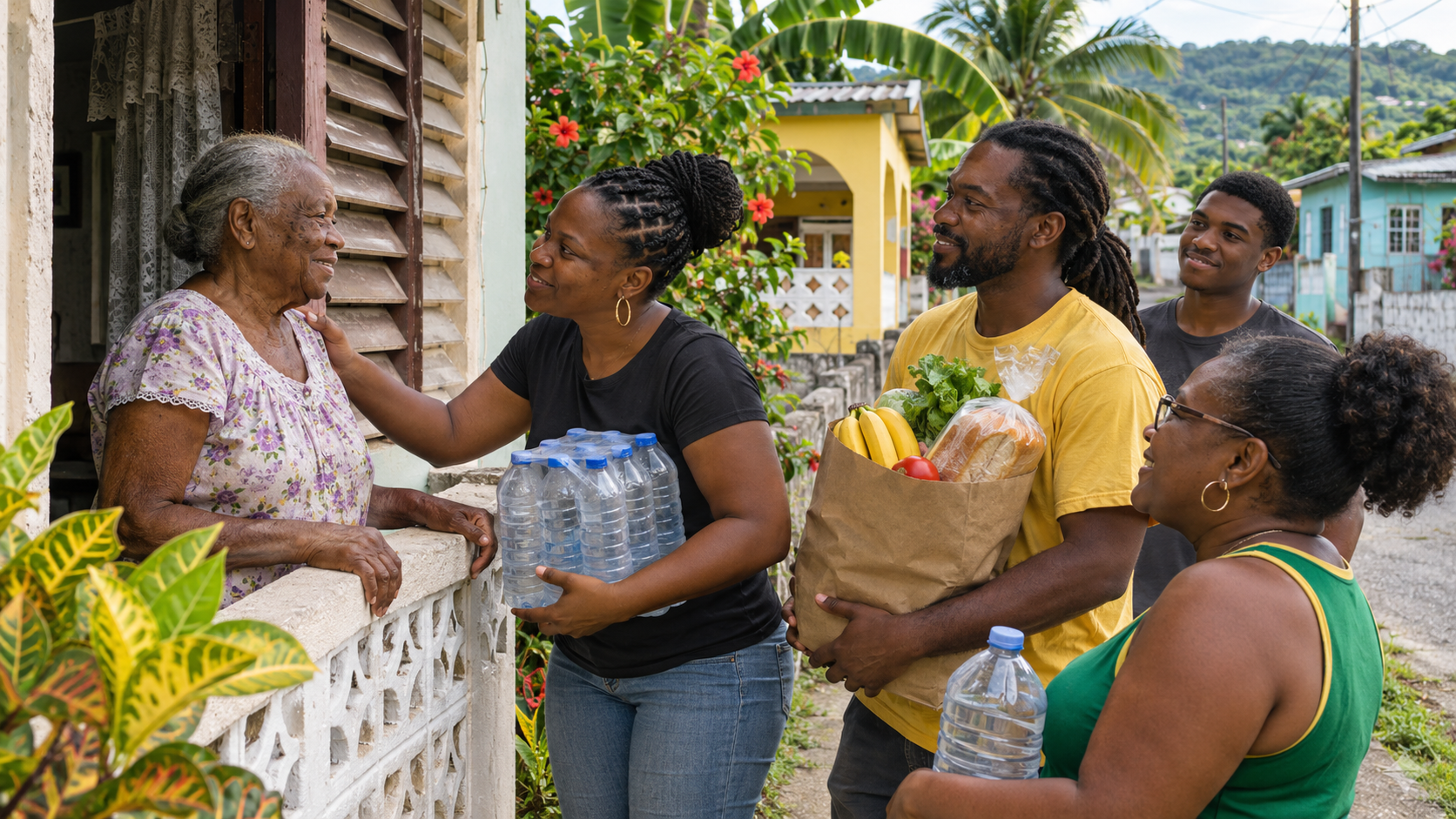
Buy supplies in sensible quantities and leave essentials available for neighbours and people who cannot shop easily. Share reliable information, check on vulnerable people nearby and coordinate practical help within your community.
7. Know where to get help
Save these numbers and confirm current guidance through official channels:
- Police emergency: 119
- Ambulance and Fire Brigade: 110
- ODPEM toll-free: 888-225-5637
The Jamaica Constabulary Force lists 119 for police emergencies and 110 for ambulance and fire services. ODPEM lists its toll-free number on its emergency contact page. Use emergency lines for urgent situations.
During an actual incident, follow instructions from ODPEM, your parish disaster coordinator, the police, health authorities and utility providers. Keep the plan simple: water, medicine, reliable information, a way to contact family and a safe place to go.
Sources and further guidance
This guide adapts official preparedness and safety guidance for household planning in Jamaica. CDC references are used for power-outage food safety and generator precautions.
- ODPEM — General Safety Tips and Emergency Kit
- ODPEM — Family Disaster Preparedness Tips
- ODPEM — Emergency Contact
- Jamaica Constabulary Force — Emergency Numbers
- Bank of Jamaica — Statement on Cyber Incident at JETS Limited
- US CDC — Power Sources
- US CDC — Discarding Food After a Power Outage
- US CDC — Avoiding Carbon Monoxide Poisoning