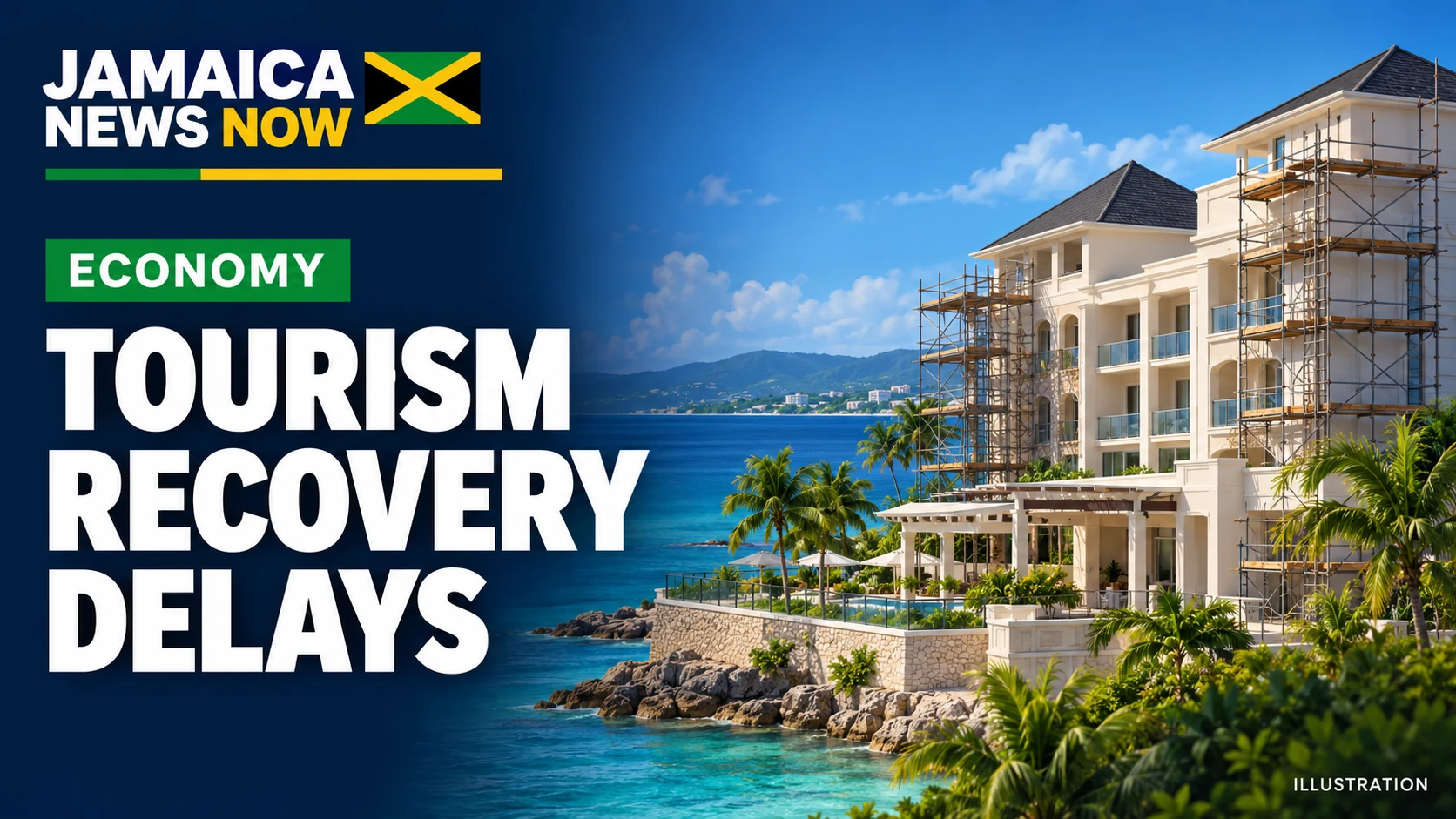
Jamaica’s tourism recovery is facing a financing problem as the winter travel season approaches: operators say insurance payments are arriving too slowly and falling short of expectations. The issue links the pace of rebuilding to whether businesses have the cash to complete repairs.
Hotels remain closed
An October 1 Associated Press report put the number of hotels still closed at about 20, nearly a year after Hurricane Melissa. It cited the Jamaica Hotel and Tourist Association as saying more than 61 per cent of claimants were still awaiting full settlements.
AP reported that insurers attributed difficulties to complex claims and a shortage of specialist adjusters. It also reported Prime Minister Andrew Holness’s warning that legislative action could be considered to speed up resolutions.
The association’s complaints
In a September 27 column, association president O’Brian Heron described a member survey in which six in ten tourism claims remained unresolved. He said the industry’s end-of-September settlement objective would not be achieved for tourism.
Heron cited complaints about deductions, including operators’ claims that valuations and the application of insurance provisions had reduced expected payments. He said around a third of claimants reported deductions exceeding 40 per cent of claim value. These are survey responses and the association’s position, rather than findings reached after adjudicating each insurance contract.
He also said 28 per cent of hotels represented in the survey had yet to reopen. That survey percentage and AP’s approximate number of closed hotels describe different measures; neither should be casually substituted for the other.
What operators are requesting
Heron called for public reporting on outstanding commercial and tourism claims, named contacts for claimants and written settlement timelines. He also asked the Financial Services Commission to publish the conclusions of its review of deductions and urged preparation of a catastrophe-claims protocol with additional adjuster capacity.
Why cash flow changes the recovery timetable
The economic connection is straightforward: repairs require payment before a property can fully resume business. Where an operator finances those repairs while awaiting insurance, money tied up in reconstruction cannot simultaneously cover other operating needs. This is the practical implication of the financing constraints described by the association, not a claim about the finances of every hotel.
Visitor demand and reopening capacity therefore need to be assessed separately. An improving tourism outlook cannot by itself establish that damaged properties have obtained the funding they require.
What to watch next
The key next indicators are updated settlement figures, clear responses to disputed deductions and confirmed reopening announcements. The September survey and October 1 report provide a picture of the problem at those points in time; they are not a live count of every outstanding claim on October 4.
For now, the recovery debate centres on the gap between the protection operators expected from their policies and the money available to rebuild. Resolving that gap requires evidence about individual claims as well as transparent reporting on the wider backlog.
Sources and reporting note
- Associated Press: tourism recovery and insurance delays, October 1
- O’Brian Heron in the Jamaica Observer: association survey and requests, September 27
Prepared 4 October 2026 from the linked reporting and official information. Jamaica News Now did not conduct the interviews or independently inspect the court files cited by other outlets. Claims, survey findings and preliminary accounts are attributed to their sources.