News brief · This is a short, dated summary. Consult its linked sources and the news archive for context and follow-up reporting.
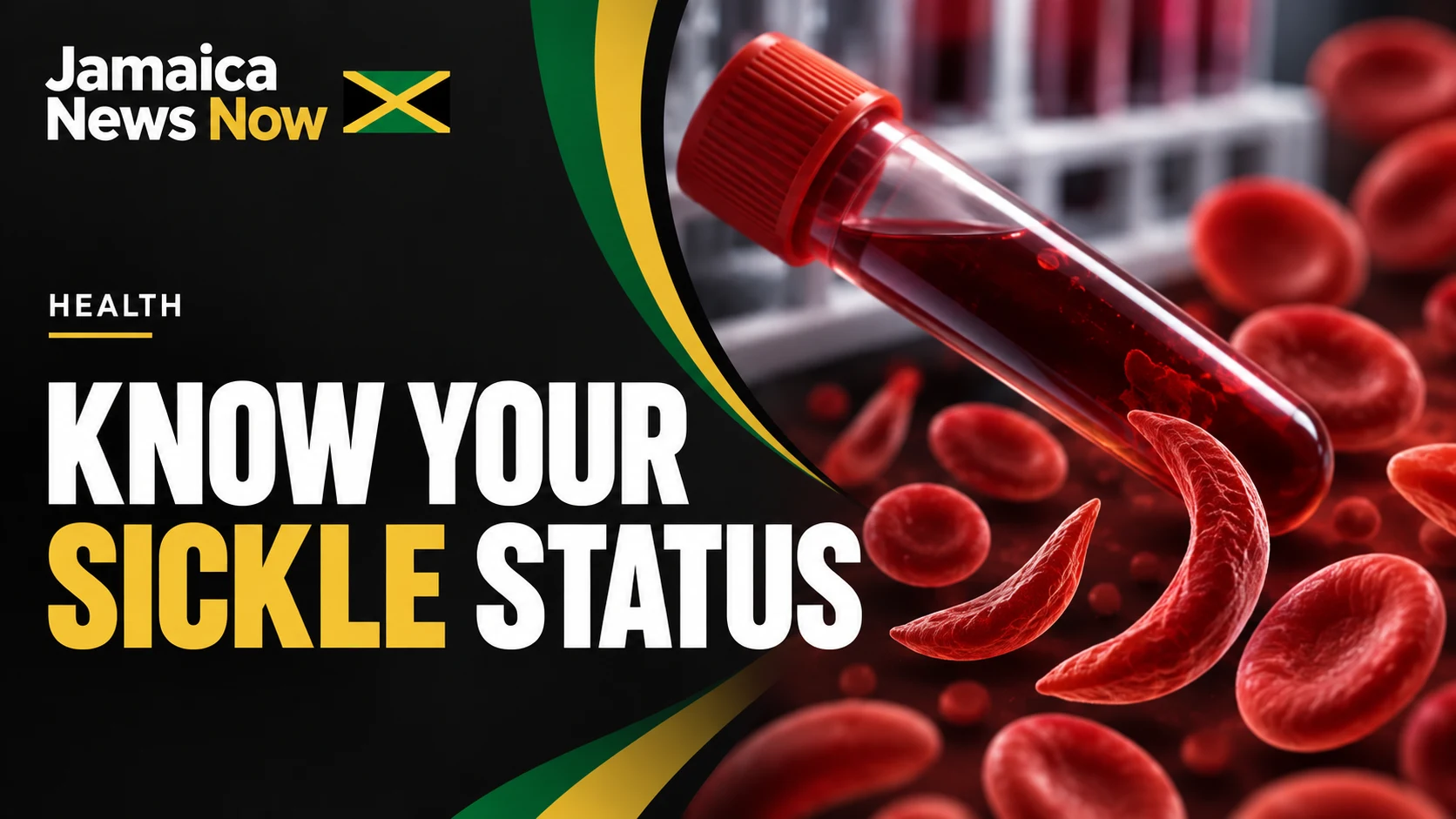
Jamaican specialists are urging people to learn their sickle cell status and understand what it can mean for their families. Sunday Gleaner reporting on October 11 estimated nearly 20,000 Jamaicans live with sickle cell disease and about one in 10 carries the trait.
Professor Jennifer Knight-Madden and Dr Lesley King highlighted awareness, early diagnosis and respectful treatment of people living with the condition.
Trait and disease differ
Sickle cell disease is inherited, not contagious. The US National Heart, Lung, and Blood Institute explains that sickle cell trait usually involves one sickle haemoglobin gene and one normal haemoglobin gene. Most carriers have no symptoms; the trait does not develop into sickle cell disease.
Disease can occur when a child inherits two relevant haemoglobin variants, one from each parent. Different combinations can cause different forms of the condition.
Understanding pregnancy risk
When both parents carry the usual sickle cell trait, each pregnancy has a 25 per cent chance of a child having sickle cell disease. It is a risk, not a certainty, and it applies independently to each pregnancy.
A healthcare professional can arrange testing and explain results and reproductive risks. Knowing a diagnosis supports informed decisions and appropriate care; it should never become a reason to stigmatise a person or family.
Sources
Coverage of the 11 October 2026 news cycle. Sources checked on 12 October 2026; figures and developments are attributed to their reporting dates.