For generations, Jamaicans have asked what justice should look like after slavery. An apology? The return of cultural treasures? Investment in schools and hospitals? Financial compensation?
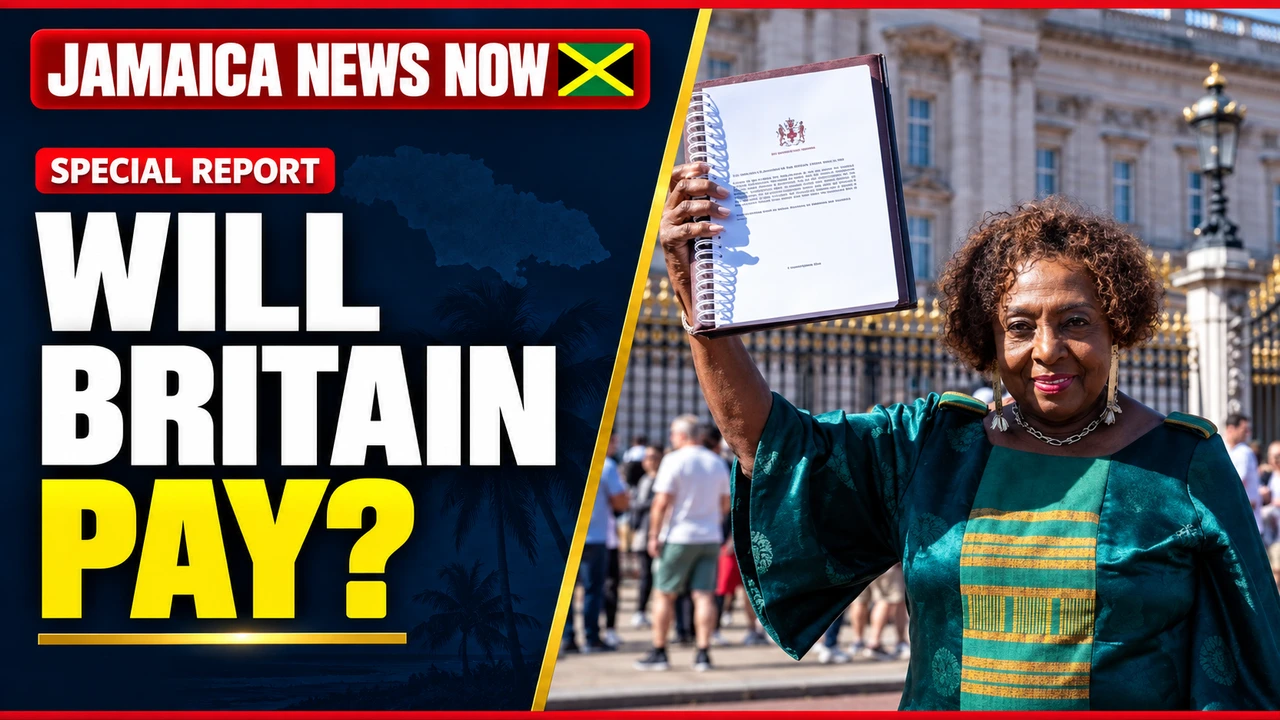
Now, Jamaica’s campaign has reached a significant new stage. According to the Jamaican Government, King Charles III has referred the country’s reparations petition to the Judicial Committee of the Privy Council. Culture Minister Olivia Grange announced the development in Parliament on September 22, following the filing of the petition earlier that month.
Could Britain eventually be required to provide a remedy for the enslavement of Africans in Jamaica? And if reparations became a reality, what would they mean for people living with Jamaica’s economic and social challenges today?
This special report examines the history behind the demand, the legal questions Jamaica is asking, resistance to reparations, and what meaningful repair could look like.
A significant step, with no payment decision
The first distinction is essential. Jamaica has not secured a reparations award. No payment has been announced. A referral for legal consideration does not establish that Britain must compensate Jamaica.
The petition opens a process whose outcome remains uncertain. But it places questions that have long been argued in public into a formal legal setting.
To understand why that matters, we must look at the system from which the claim emerged.
The wealth produced through slavery
Under plantation slavery, human beings were bought, sold, inherited and forced to work. Their freedom, family relationships and opportunities were subordinated to the demands of owners and the production of wealth.
Sugar became a major link between the Caribbean and Britain. The plantation economy also connected merchants, shipping interests, lenders and other businesses to the labour of enslaved people.
Research by University College London has traced how British slave ownership influenced the formation of modern Britain. Its work examines the people who owned enslaved Africans, the compensation they received, and the lasting effects of that wealth.
For reparations advocates, this history establishes the starting point of the argument. People were compelled to produce wealth while being denied ownership of their labour and control over their lives. The benefits and losses were distributed profoundly unequally.
That inequality becomes especially clear when we examine what happened at abolition.
Who received compensation?
Britain’s Slavery Abolition Act was passed in 1833 and took effect in 1834. However, compulsory labour continued for many formerly enslaved people under the apprenticeship system until 1838.
The British state authorised £20 million in compensation for slave owners. Those payments compensated owners for losing what the law had treated as their property. The enslaved people themselves did not receive that compensation.
This is one of the central historical facts behind today’s demand. The state recognised a financial loss suffered by owners. It did not provide an equivalent remedy to the people whose lives and labour had been taken.
Supporters of reparations ask why the financial interests of enslavers were protected while the claims of the enslaved were left unanswered.
Freedom was an enormous victory, achieved through resistance, sacrifice and sustained struggle. But emancipation did not automatically provide land, savings, education or compensation for years of unpaid labour.
The argument about lasting harm
The CARICOM Reparations Commission argues that slavery and colonial rule left enduring damage in Caribbean societies. Its case connects historical dispossession to unequal opportunities and the difficulties newly independent countries faced in building public institutions.
That is an argument about how advantages and disadvantages can pass between generations. A family with property can use it as security, pass it to children, or sell it to finance education. A family without comparable assets may have to begin each generation with far fewer resources. The same principle can apply to institutions and countries.
However, a serious examination must also recognise that modern Jamaica has been shaped by many forces. Government decisions, international trade, migration, investment, crime, natural disasters and changes in the global economy all affect development.
A credible reparations case must demonstrate particular historical harms and explain how proposed remedies would address them. Which institutions benefited? What records establish those connections? Which losses can be identified? And how should responsibility be assessed?
These questions turn a powerful moral argument into a detailed case for action.
The three questions Jamaica is asking
In plain language, Jamaica’s petition asks whether the capture, transportation and treatment of Africans as property was lawful under English law; whether their seizure, transportation and enslavement in Jamaica violated international law; and whether Britain has a legal obligation to provide a reparatory remedy to the Jamaican people.
Those questions should not be confused with a court order directing an immediate payment. They seek legal answers about the underlying wrongs and the responsibility that may follow.
There is also a distinction between the monarchy and the British Government. A petition addressed to the King does not mean the King can personally decide to transfer public money to Jamaica. Any eventual settlement would involve further legal, political and financial decisions.
Reporting on the referral indicates that a Privy Council opinion would not itself compel the British Government to pay reparations.
A favourable legal opinion could strengthen Jamaica’s negotiating position, influence public debate or support further legal arguments. Those are possible consequences, rather than outcomes already achieved.
What reparations could mean
For many people, the word reparations immediately suggests a cheque. Financial compensation is part of the regional discussion. However, proposals extend across several areas of public life.
CARICOM’s revised framework includes health, education, cultural development, psychological rehabilitation, support for Indigenous communities, gender justice, debt cancellation and monetary compensation. The revised plan was adopted by regional leaders in July 2026 and relaunched at the regional reparations conference in Barbados in September.
The earlier ten-point plan also called for a formal apology, technology transfer and stronger connections between African descendants and their ancestral histories.
For an ordinary Jamaican household, the practical question is how any agreed programme would improve daily life. An education initiative might support scholarships, teacher development, research or vocational training. A health programme might improve access to treatment, equipment or specialist services. Cultural investment might help preserve archives, strengthen museums and expand access to historical records.
These are illustrations of what negotiated programmes could involve. They are not benefits already approved under Jamaica’s petition.
The design would matter as much as the headline. Who would qualify? Who would manage resources? Would communities help decide priorities? How would the public measure results?
If funds were negotiated, Jamaicans would need to know how much was received, what it was intended to achieve, and how spending was independently checked. Programmes would need measurable commitments: how many people would be reached, over what period, and with what evidence of improvement.
Britain’s position and the opposing arguments
Britain has continued to reject slavery reparations, according to recent reporting on Jamaica’s petition.
The wider debate contains several recurring objections. Should people alive today bear a financial responsibility for acts committed before they were born? How could compensation be calculated after so much time? Who should receive it? How should responsibility be shared among states, businesses and institutions involved?
Reparations advocates focus much of their case on the continuing responsibility of states and institutions. They argue that governments helped establish and sustain the system, while wealth accumulated through slavery continued beyond the lives of individual owners.
That raises a difficult question: if benefits can be inherited, can obligations survive across generations?
Britain’s role in abolition is also frequently raised. Ending the slave trade and slavery is an essential part of the historical record, as are the resistance of enslaved people and the work of abolitionists. The reparations debate asks whether ending a system of abuse also settled the losses suffered under it.
A related discussion concerns Jamaica’s cultural heritage. Grange has said that inspections of British Museum holdings identified more than 8,000 artefacts from Jamaica, and that engagement with the museum has improved.
The return of artefacts and the slavery reparations petition involve different processes. Each object may require examination of its history, ownership and circumstances of removal. Yet both discussions raise questions about access to Jamaica’s past: who holds the evidence, who interprets it, and how Jamaicans can study their own heritage.
What happens next?
In her announcement to Parliament, Grange said Jamaica was awaiting directions from the Judicial Committee and that the Attorney General was preparing for the case.
The next meaningful developments will be information about procedure, any timetable, and the legal consideration of the questions submitted. Beyond that process, the regional diplomatic campaign continues. CARICOM has said it intends to advance reparations at the Commonwealth Heads of Government Meeting scheduled for Antigua and Barbuda in November.
That provides another forum for discussion. It does not guarantee an agreement.
For readers following the story, the key is to watch for concrete decisions. Has a legal opinion been delivered? Has Britain changed its position? Have negotiations begun? Has a remedy been defined, funded or implemented?
Jamaica’s petition has brought renewed attention to questions left unresolved at emancipation. What responsibility remains for the taking of human freedom and labour? How should a society assess wealth built through injustice? And what would repair require today?
The answers may take time. The legal and political obstacles are substantial. For Jamaica, the challenge is to sustain a case grounded in evidence and explain how any eventual remedy would benefit the people. For Britain, the challenge is to respond to the historical record and the questions Jamaica has formally raised.
For the public, the task is to judge developments by what they actually deliver.
Sources and reporting note
This explainer is adapted from the Jamaica News Now broadcast narrative. It uses published reporting and historical research; no original interviews are claimed. The referral is reported by Jamaica’s Government and is not a reparations award.
- Jamaica Information Service: petition referral, 24 September 2026
- CARICOM: revised reparations framework, 18 September 2026
- CARICOM Reparations Commission: original ten-point plan
- UCL: Legacies of British Slave-Ownership
- The National Archives: British transatlantic slave trade records
- The Guardian: referral and its limits, 23 September 2026